Eulogy for Will Kirkpatrick
Virtuoso Pianist
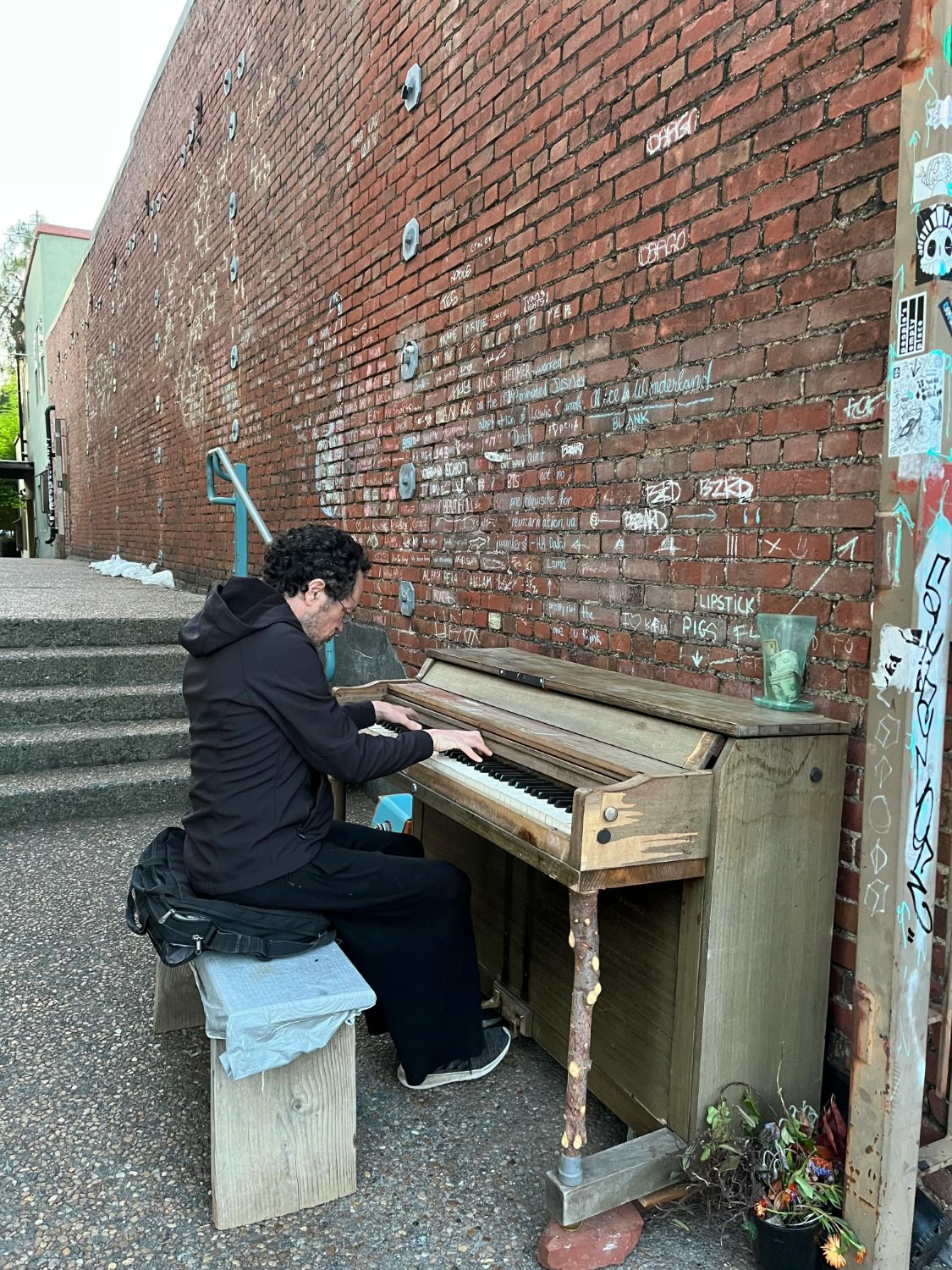
“Every one sees what you appear to be, few really know what you are.”
— Nicolo Machiavelli
It is highly inappropriate that I begin this eulogy with a quote from Nicolo Machiavelli. Will Kirkpatrick hated Machiavelli! As Will explained it to me, Machiavelli taught people how to exploit other people, teachings that Will, a kind person, wholeheartedly disapproved of. I’ve actually never read, “The Prince”, but I had a copy of that book laying around at the Institute of Crazyology, my grandiose pop-up gallery in San Francisco, in 2021 when Will came to perform his rendition of “Misirlou” at the “Inaugural Crazyology Ball”.
During a brief respite from the fearful surges of the Pandemic, a cross-section of classic San Francisco bohemia gathered on the Summer Solstice in the stately atrium of the 1000 Van Ness building. Will had spent untold hours perfecting his performance of Misirlou, an early 20th Century romantic standard. It’s a rollicking syncopated instrumental derived from a Greek folk song, built upon Near-Eastern melodies and punctuated with dramatic arpeggios. With romantic grandeur, Misirlou sang out from Will’s masterful hands. The crowd loved it! The performance expressed all the rapture of the Dionysian. I’ve been told that was a memorable evening, yet I scarcely remember anything but Will’s “Misirlou” - he stole the show!
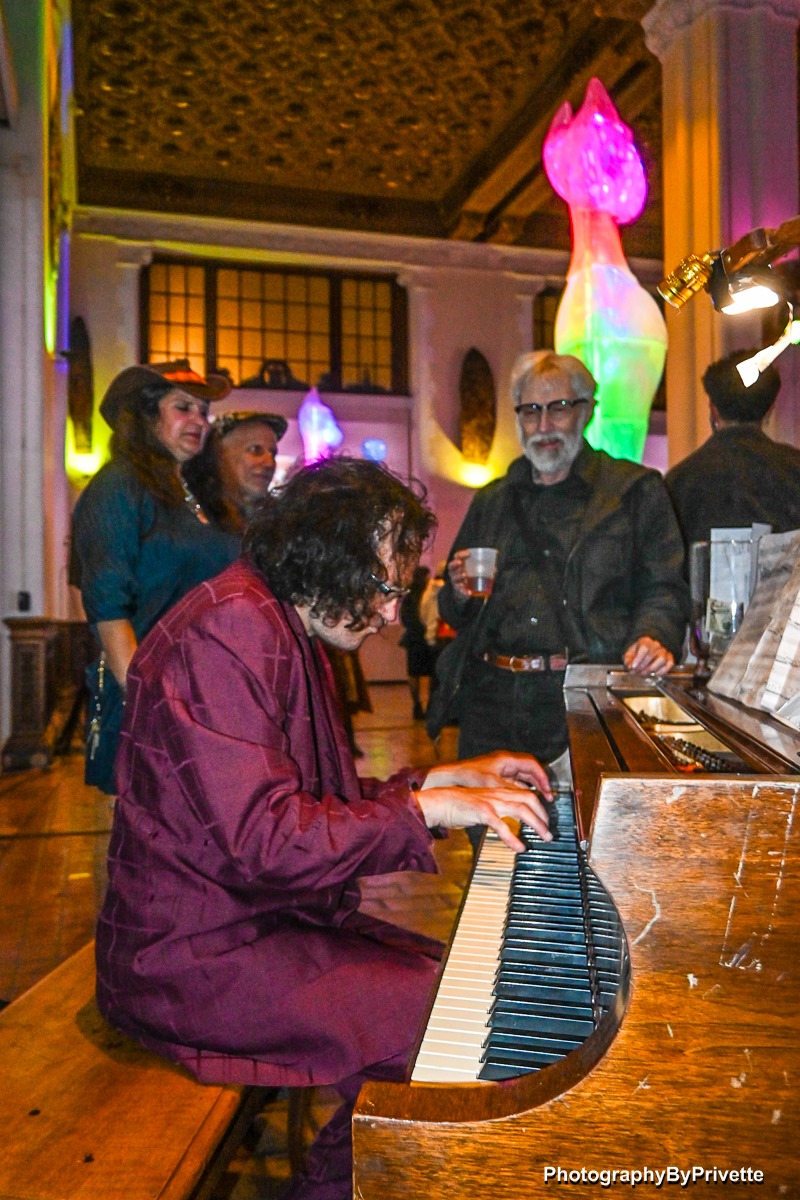
Great performances require careful preparation. Will arrived at the Institute of Crazyology in the early afternoon. He needed to get acquainted with the piano. Scotch tape of a very specific type was needed to tape all of the sheet music together margin to margin and the entire piece was draped over the piano, a freshly tuned Baldwin baby grand. It didn’t seem to me that he needed the sheet music at all, but it was a great prop that enhanced his eccentric virtuoso pianist persona.
While these preparations were important, challenging me about my supposed allegiance to Machiavelli was of equal importance to Will. Throughout the day he took me to task for even having “The Prince” in my possession. Against Machiavelli, Will upheld Francois Rabelais as though this were some natural ideological dichotomy. I associate Rabelais with his giant father and son protagonists, Gargantua and Pantagruel, and specifically with the epic deluges of urine these heroes unleashed upon their enemies - 520,836 human casualties split evenly between their respective inundations of piss. Or I associate Rabelais with his “Abbey of Theleme” a kind of “anti-monastery” where individual sovereignty and hedonistic luxury was the order, and “Do what thou wilt” the only vow.
I think Will’s philosophical instinct was right: Machiavelli and Rabelais are two pillars of an archetypal dichotomy. Machiavelli is Apollonian and Rabelais is Dionysian. The Apollonian Machiavelli represents the established hierarchical authority that Will despised. The powerful read Machiavelli and employ his cold wisdom to their benefit. Poets, mystics and rebels read Rabelais and aspire to his ribald and ecstatic ideals. The Sun God, Apollo, represents reason and order as seen soberly in sunlight. The God of Wine, Dionysus, represents intuition and chaos, as seen intoxicated by the light of the moon.
In 19th Century music’s, “War of the Romantics”, Johannes Brahms represented the Apollonian classicist, and Franz Liszt, the Dionysian avant-gardist. In the late 1990s, I first heard of Will as a specialist in the “Dionysian” Franz Liszt. I sought Will out to perform the “Mephisto Waltz no. 1” for soundtrack music for a short horror film. Will was delighted with the proposition, and I was captivated not only by his extraordinary musical skill, but also by his agile wit, inquisitive mind, and garrulous conversation. Both of us were of firmly “Dionysian” predilection, and we were friends immediately.
The late ’90s were a tumultuous time, and I don’t recall precisely what became of my collaboration with Will. I never finished the horror film before being swept away to exotic travels in South East Asia, and extravagant production for Burning Man. I heard that Will had lost his apartment on Capp St. and had been spotted sleeping atop his upright piano out in the street. This image amused, amazed, but ultimately saddened me. It seemed like a Chaplinesque image, as though Chaplin’s famous “Tramp” were a pianist, a vagabond pianist, so devoted to his art that he would drag his piano through the back alleys, and, having nowhere else to go, take his rest on top of the instrument. But this was tragic, not tragicomic, because I knew how great his talent was, and to what extent this spectacle was a genuine travesty.
“Every one sees what you appear to be, few really know what you are.”
People saw Will as crazy. I see him as a “Crazyologist”. If he was indeed insane, it was an applied insanity. A madness single-mindedly devoted to the mastery of music. In the philosophy of Crazyology there is an ideal of “Ecstatic Transgression”. The Crazyologist is Dionysian and the devotion to art is a species of “mad love”, and love that is mad is always transgressive. The Irish Poet, William Butler Yeats, in his book, “Fairy and Folk Tales of the Irish Peasantry”, speaks of this mad love in relation to the “Leanhaun Shee” (Gaelic) or “Fairy Mistress” - a beautiful but vampiric spirit whose mad love preys upon poets, artists, and musicians.
It seems to me that Will’s Leanhaun Shee was a remarkably jealous lover who kept Will all to herself. Will’s mad love for his muse drew him relentlessly to the music itself, to the exclusion of all other considerations of the musical profession - gigging, recording, promotion, etc. For Will, those things were largely a distraction from the pure pursuit of music completely for its own sake, or - perhaps - for the delight of his vampiric muse, the Leanhaun Shee. This muse is like a Maenad, a priestess of Dionysus, who, in the frenzied ecstasy of inspiration tears the artist, at once her deity and her sacrifice, to shreds. The artist’s life is torn apart, and from these shreds the great creations emerge.
Fast forward to June 2026. Will and I had kept in touch through the intervening years. He would often send me recordings of pieces he was working on, and we’d banter over music, philosophy and literature. I was glad to hear that he was moving to San Francisco, and he was overjoyed with his prospects - for starters he had regular employment with the SF Ballet. He was not only determined, but ebullient with optimism and enthusiasm for his future. In our last conversation, we discussed AI generated music. I told him I had set a bunch of my poems to music and was very pleased with the results. I suggested that he look into AI music because I thought there was a lot that he could do with it. I was really surprised at how receptive he was, he seemed genuinely interested and asked a lot of questions about it. A couple of nights later he called, but I missed his call. I returned his call the following day but didn’t reach him. The day after that, I heard he had died. I was shocked. He seemed so alive, so full of excitement. Indeed, the last thing he told me was how much he loved life and how excited he was for his future and how confident he was that he could accomplish great things with his music. All that he told me very emphatically in his characteristic way.
It is hubris to speculate on the mysteries of death, but I will risk it:
Of course there is the physical cause of Will’s death. This cause makes no sense to me. It simply doesn’t compute. I don’t understand how it could even have happened, but it is merely the outward circumstance - it is not the real cause of Will Kirkpatrick’s death.
Yeats says that the Leanhaun Shee may lead her beloved to an early death. That is not unlike the words of Misirlou:
“Oh my Egyptian magical, exotic beauty
Craziness will come to me, I can’t suffer anymore”Misirlou, English translation from Danai Stratigopoulou version
Going mad for the elusive beauty of the exotic muse that both inspires and tortures.
The real cause of Will’s death was metaphysical - not physical. The Leanhaun Shee, the Fairy Mistress, took Will Kirkpatrick, virtuoso pianist, Crazyologist, my friend, away to the other side. I believe there’s a beautiful piano there for him to play in perfect tune with the universe.
“It is my feeling that Time ripens all things; with Time all things are revealed; Time is the father of truth.”
— Francois Rabelais